
Work Comes First
Organizations often respond to workforce challenges with more training, more communication, or more content.
At Flowtology, we start by understanding the work people do. Before recommending solutions, we analyze tasks, workflows, performance requirements, and the support people need to perform successfully.
By understanding work first, we can identify where people need knowledge, guidance, support, process improvements, or technology to perform successfully.
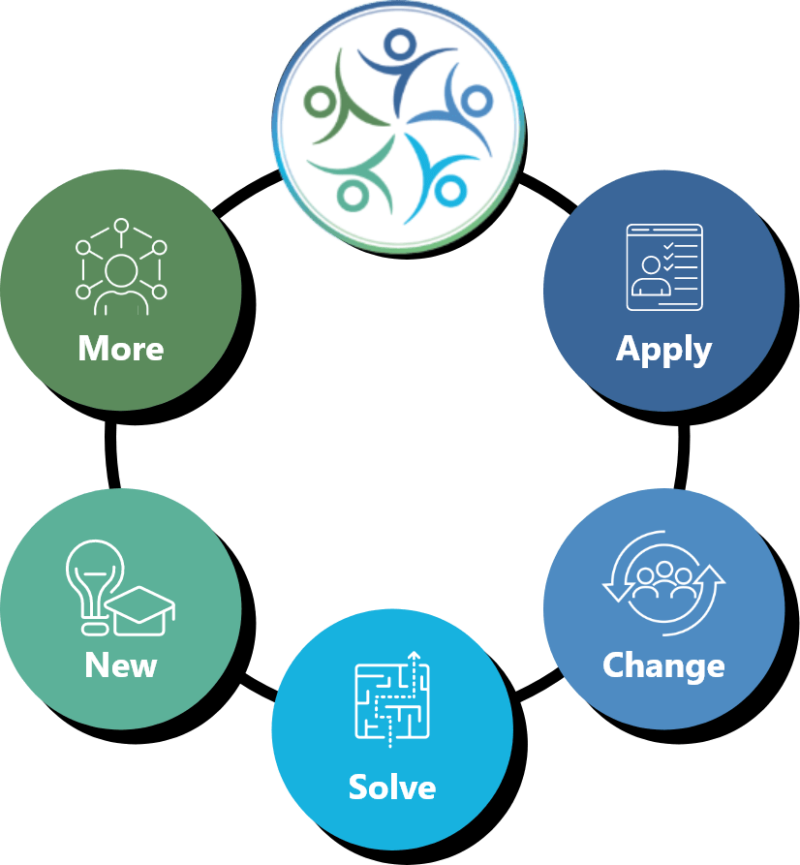
The 5 Moments of Need®
People develop capability most effectively when learning and support are connected to the work they perform every day. The 5 Moments of Need® methodology is built on this principle, recognizing that performance does not happen in classrooms, courses, or learning platforms. Performance happens while people perform tasks, follow workflows, solve problems, adapt to change, and make decisions in real work environments.
This represents a fundamental shift from a learning-first to a work-first mindset. Instead of asking what people need to learn, we start by understanding what people need to do. By analyzing tasks, workflows, and performance requirements, we can identify the knowledge, guidance, support, and technologies people need to perform successfully at the moment of need.
By connecting learning, performance support, and workflow optimization directly to work, organizations can accelerate onboarding, support change adoption, and improve workforce performance.
Performance Support and Human-AI Task Allocation
At Flowtology, performance support is about providing the knowledge, guidance, resources, and assistance people need while performing their work. This performance support can take many forms, including job aids, process guidance, Digital Coaches, and AI-powered assistance.
Not all tasks carry the same level of risk. Some mistakes create only minor inconveniences, while others can have significant operational, financial, compliance, or safety consequences. Understanding the potential impact of failure is essential when determining how work should be supported and performed.
Using a Human-AI Task Allocation approach, we evaluate tasks based on factors such as complexity and the critical impact of failure. This helps organizations determine where performance support is required, where AI can augment human performance, and where activities can be partially or fully automated.
By combining performance support with targeted learning and Human-AI Task Allocation, organizations can improve workforce capability, increase confidence, reduce operational risk, and optimize performance where it matters most.

Measuring Business Impact
Workforce capability is not an end in itself. It is a driver of organizational performance. At Flowtology, we believe the value of workforce capability should be measured by its contribution to business outcomes.
We start by identifying the organizational outcomes that matter most and then determine how workforce capability contributes to achieving them. By combining operational performance indicators with business outcomes, organizations can better understand which interventions create value and where additional improvements are needed.
Depending on the challenge, measures may include reduced time-to-competence, faster change adoption, improved productivity, increased workforce confidence, reduced operational risk, improved quality, and other performance indicators that contribute to business success.
Our goal is not to measure learning. Our goal is to measure impact.
Real World Results
Every organization faces unique workforce challenges, but the goal is always the same: helping people become competent faster, adapt more effectively, and perform with confidence. Explore how we have helped organizations improve workforce capability, accelerate transformation, and drive measurable business results.




Ready to Improve Workforce Capability?
See how a work-first approach can accelerate onboarding, support change adoption, improve workforce performance, and deliver measurable business results.
Contact us
Let’s get in contact